
Haptic Pulse: pulse, breathing and rhythms felt on your wrist
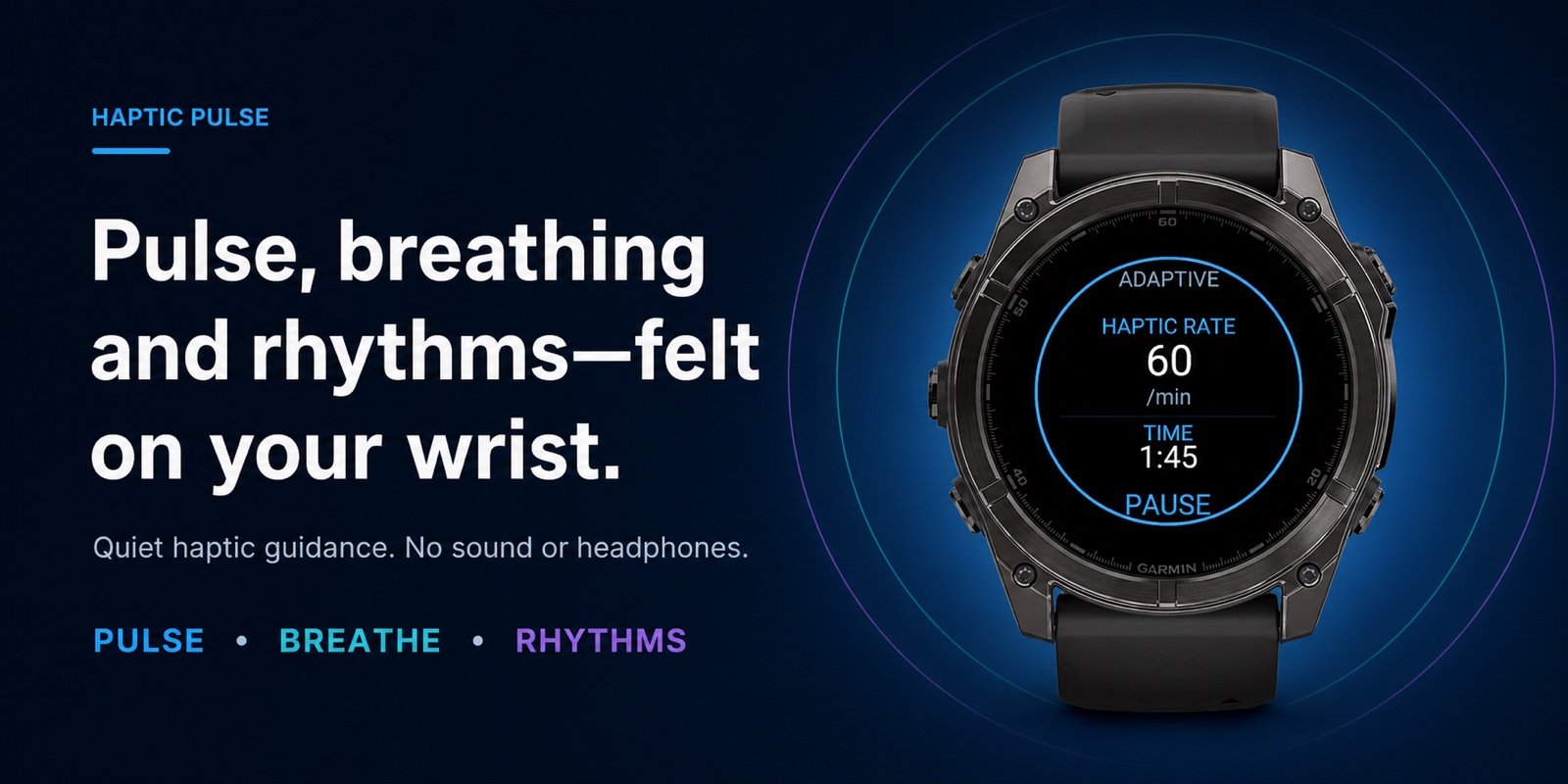
Haptics are patterns of vibration you feel on your wrist. Haptic Pulse gives the vibration motor in your Garmin watch a little more structure: a heartbeat-like pulse, guided breathing and a library of tactile rhythms.
Follow the cues without needing sound, headphones or repeated screen checks. No phone is needed during a session.
What it is
A physical cue, not another screen to watch.
Choose Pulse when you want a repeating heartbeat-like sensation. Choose Breathe when you want vibration to mark inhale, hold, exhale and pause. Choose Rhythms when you want to explore patterns or make one yourself.
There is no prescribed exercise and nothing you need to achieve. Before a demanding moment, during focused work or meditation, while winding down or simply out of curiosity choose the mode that suits the moment.
Three modes
Start with the kind of cue you want.
01 · PULSE
Heartbeat-like haptics
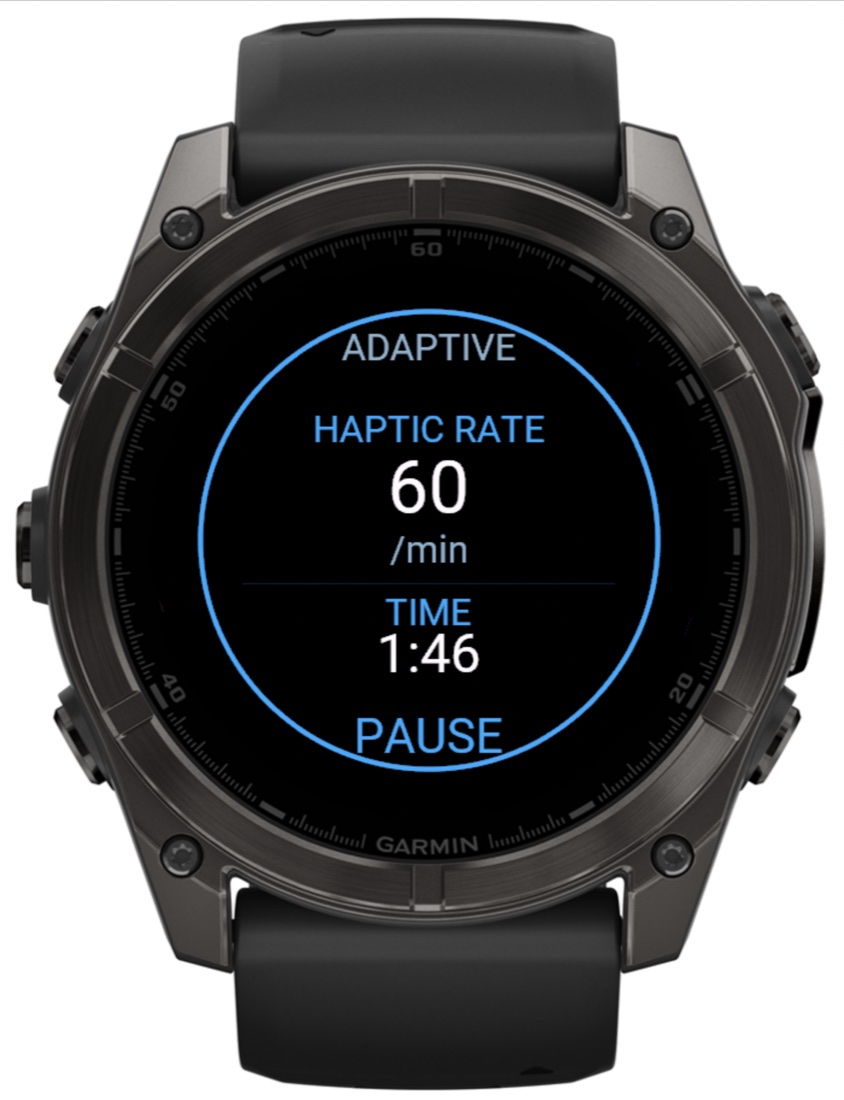
Follow a repeating, heartbeat-like vibration. Adaptive mode sets the rate to 70–100% of your measured wrist heart rate, with 80% as the default. A fixed manual rate is also available.
- Adaptive: 70–100%
- Manual: 40–100 /min
- Four pulse patterns
02 · BREATHE
Guided haptic breathing
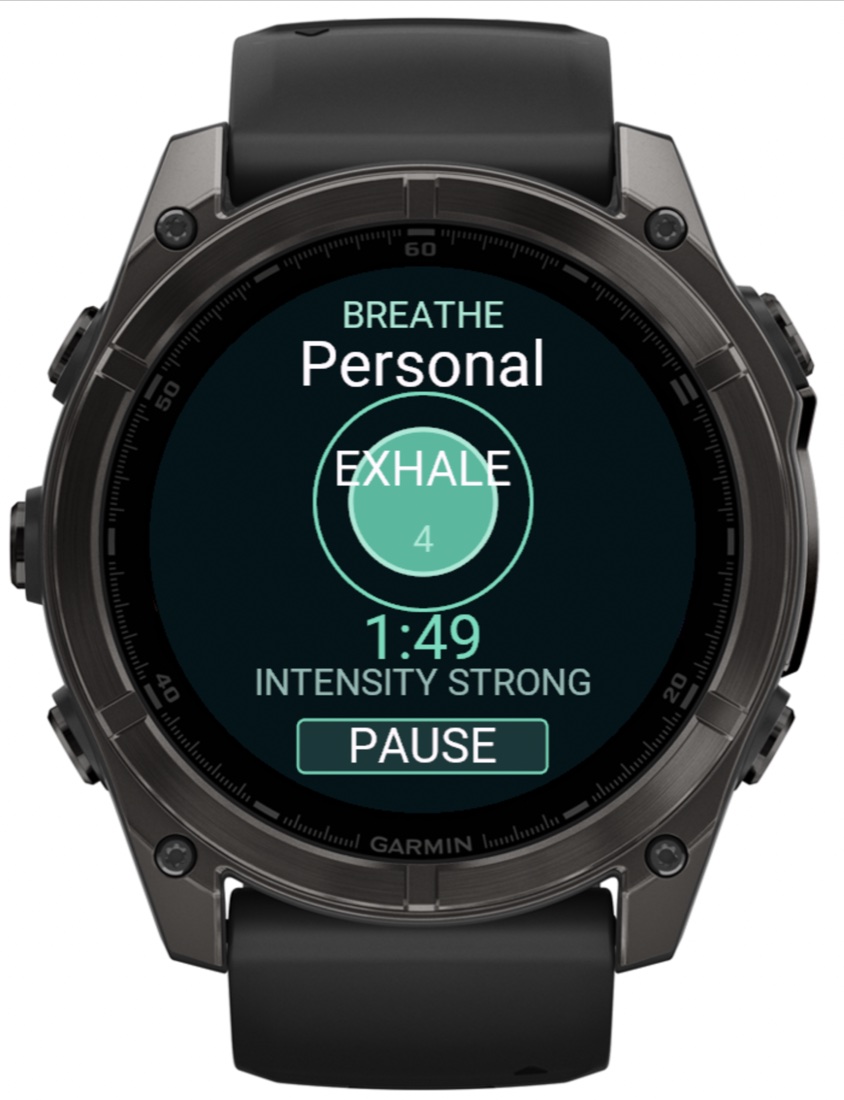
Vibrations guide inhale, hold, exhale and pause, accompanied by a visual guide. Choose one of four presets or set your own four phase lengths.
- Four breathing presets
- Personal phase timing
- Visual breathing guide
03 · RHYTHMS
Tactile rhythm library
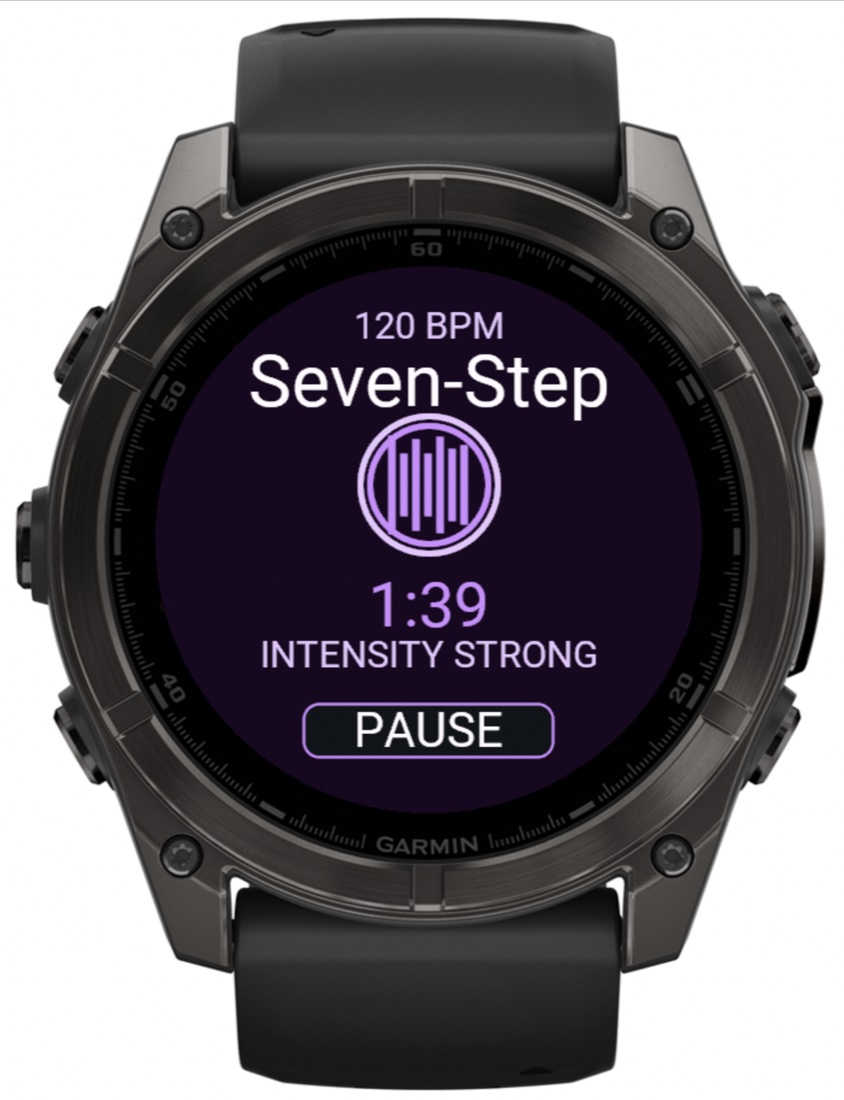
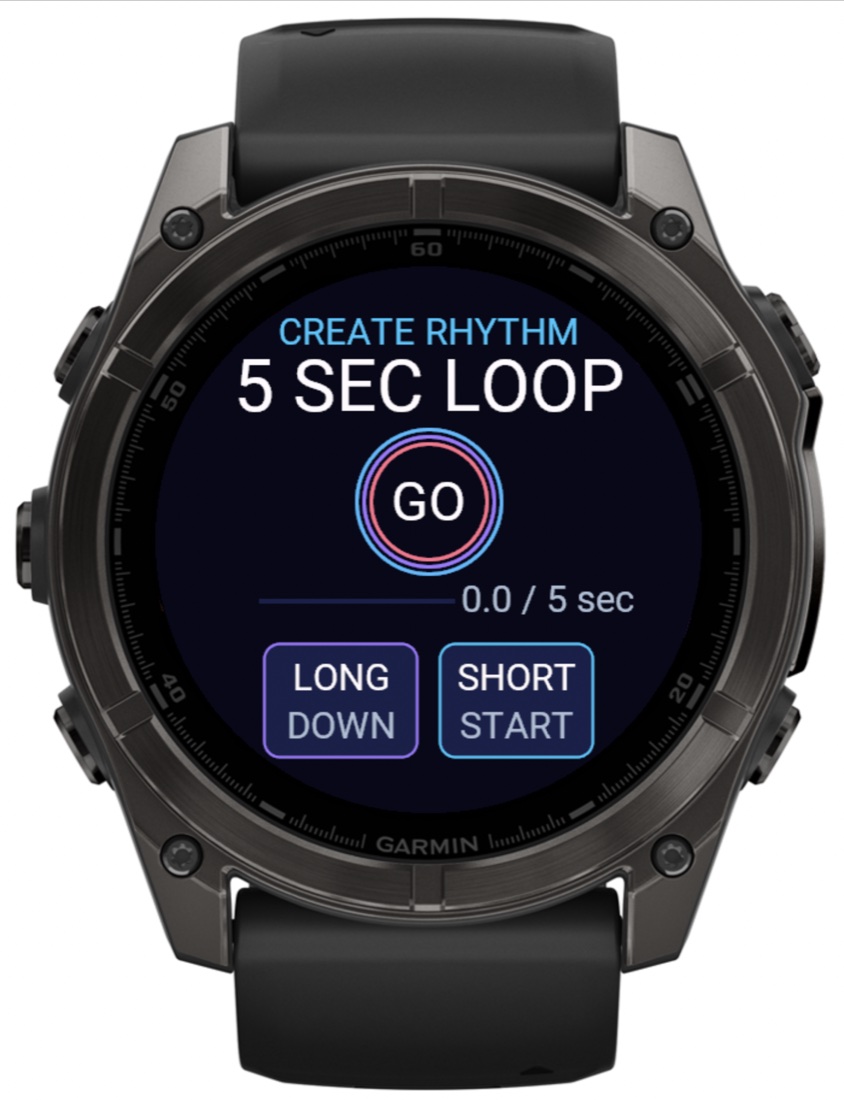
Explore 16 patterns of short and long vibrations, each with its own tempo and character. Compare how they feel or tap out a 3–5 second pattern of your own.
- 16 built-in rhythms
- Slow, medium and fast
- Three personal rhythm slots
Inside the app
One app. Three experiences.
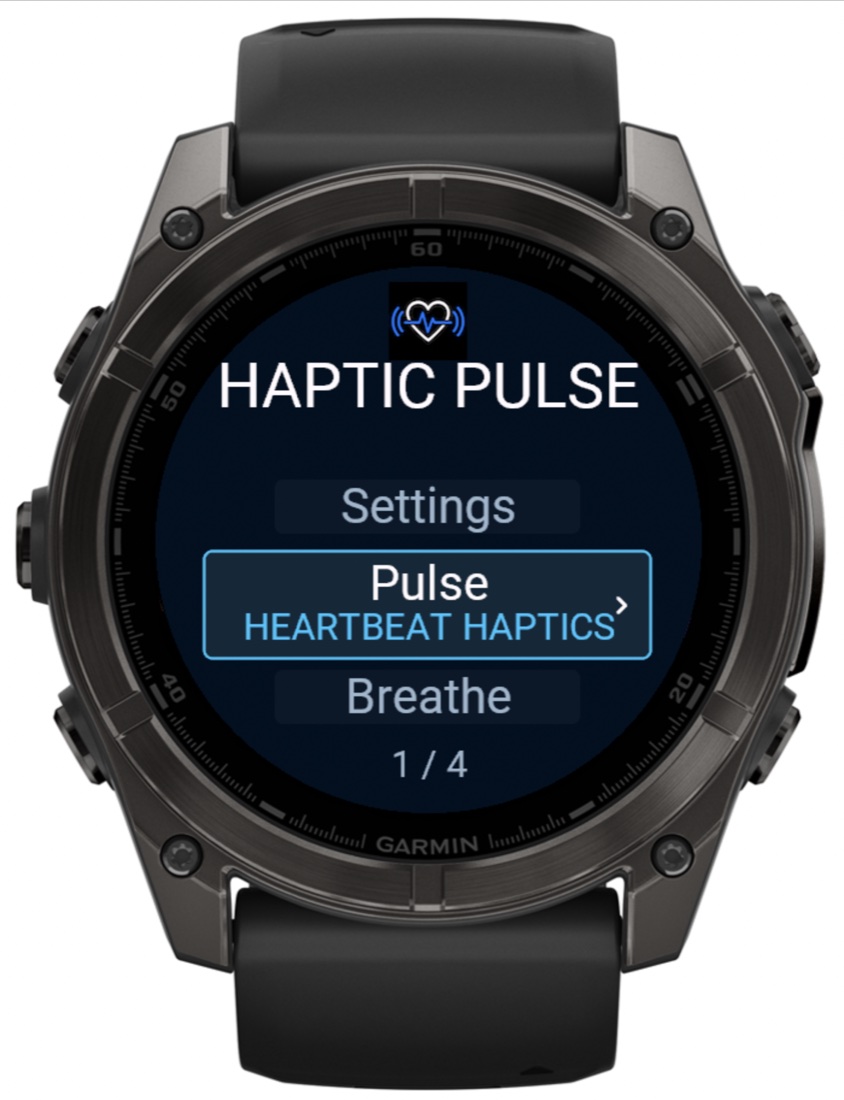
Pulse
A heartbeat-like pace that can follow your heart rate.
The watch samples its optical heart-rate signal and changes the haptic rate gradually as the reading changes. At the 80% default, a measured 75 bpm becomes 60 haptic pulses per minute.
You can instead choose a fixed rate between 40 and 100 pulses per minute.
Breathe
Follow the vibration, or glance at the guide.
Short pulses accompany the inhale and a longer cue accompanies the exhale. The inner circle grows during inhale, holds during the pause and contracts through exhale.
Choose a preset or make a personal pattern by setting inhale, hold, exhale and pause.
Rhythms
Explore patterns or build one with your fingers.
The rhythm library ranges from slow, spacious patterns to quicker, more active loops. The recorder lets you place short and long vibrations into a 3–5 second loop and save it on your watch.
Personal rhythms and settings remain on the watch.
Before and after
HR and stress score.
If available, Haptic Pulse samples heart-rate and Garmin stress readings before and after a session and displays the values for comparison.
Availability depends on your watch and the sensor data available at the time. The readings are for reference only. Haptic Pulse does not interpret the change, or score the session.
Research-inspired:
The idea has a research history.
Studies have explored heartbeat-like cues and haptic feedback in situations including anticipation of public speaking and time-pressured mental tasks. Azevedo and colleagues used a double wrist vibration about 20% below resting heart rate; that slower rate inspired the 80% default in Pulse mode.
Other wearable studies have reported differences in selected anxiety, physiological or performance measures under specific conditions. Results have not been uniform, and interpretation, individual differences, device, location and task may matter.
What that means here
Haptic Pulse has not itself been evaluated in a scientific study. Findings from research on other devices and protocols should not be assumed to apply to this app. No effect on stress, anxiety, heart rate, sleep, focus or performance is claimed.
Pulse, breathing and rhythm modes are offered as personal haptic tools for people who are curious to explore them.
Selected references
Gray, M. A., Harrison, N. A., Wiens, S., & Critchley, H. D. (2007). Modulation of emotional appraisal by false physiological feedback during fMRI. PLOS ONE, 2(6), e546. https://doi.org/10.1371/journal.pone.0000546
Costa, J., Adams, A. T., Jung, M. F., Guimbretière, F., & Choudhury, T. (2016). EmotionCheck: Leveraging bodily signals and false feedback to regulate our emotions. UbiComp ’16, 758–769. https://doi.org/10.1145/2971648.2971752
Azevedo, R. T., Bennett, N., Bilicki, A., Hooper, J., Markopoulou, F., & Tsakiris, M. (2017). The calming effect of a new wearable device during the anticipation of public speech. Scientific Reports, 7, 2285. https://doi.org/10.1038/s41598-017-02274-2
Costa, J., Guimbretière, F., Jung, M. F., & Choudhury, T. (2019). BoostMeUp: Improving cognitive performance in the moment by unobtrusively regulating emotions with a smartwatch. Proceedings of the ACM on Interactive, Mobile, Wearable and Ubiquitous Technologies, 3(2), 40. https://doi.org/10.1145/3328911
Private by design
Your data stays on your watch.
No account or network access
No advertising, analytics or tracking. No personal, health or usage data is sent to the developer or stored remotely by Haptic Pulse.
Processed locally
Heart-rate and stress data are processed on the watch. Settings and personal rhythms also remain on the watch.
Full privacy policy
Read how the Garmin app handles data and how this website uses Independent Analytics. Full privacy policy here.
Please note
Haptics are personal.
Haptic Pulse is a wellness app, not a medical device. Optical readings may be delayed, incomplete or inaccurate and should not guide medical or emergency decisions.
Some people enjoy a quiet physical cue. Others find repeated vibration distracting or uncomfortable. Change the pattern or stop the session if it does not feel right for you, and do not interact with the app in situations that require your attention.
Haptic Pulse for Garmin
Available on Garmin Connect IQ store
Pulse, guided breathing and tactile rhythms without sound, headphones or a phone during the session.
Support and feedback: info@haptic-pulse.com